ENGL 1200: the Interpretation of Literature
Trippin’ Through Time
Course Description:
How do narratives help us imagine the historical past and possible futures? How do different emotional states, like boredom, anxiety, grief, and desire affect our experience of time? How do media like books, movies and songs change our sense of time?
In this course, we will explore the politics, pains, and pleasures of existing in time, space, and place across different genres. We will encounter works such as a novel about a young Mississippi boy who time travels to 1985 & 1964 (Long Division), an immigrant mother who can’t finish her taxes and is plunged into a multiverse adventure (the Daniels’ Everything Everywhere All at Once), and stories about the messiness of love and loss. Our classroom will provide a space to discuss questions (like those above), ideas, insights, themes, and topics you find fascinating about selected readings. These conversations will help us better understand how literature captures an array of experiences, perspectives, and temporalities; many of which are situated in the structures, categories, and histories of our social world. Our critical discussions will serve as a starting point to generating compelling ideas you will develop in through creative, research-based, and informal writing. At the end of the semester, you will have an archive (final portfolio) capturing your own experiences of time, space, and place.
Texts:
- Kiese Laymon Long Division
- Tommy Orange There There
Selected readings from:
- Ling Ma Bliss Montage
- Bora Chung Cursed Bunny
- Kali Fajardo-Anstine Sabrina & Corina
- Jose Olivarez Citizen Illegal
- Natalie Diaz When My Brother Was an Aztec
- Victoria Chang OBIT
The Poetics of Revenge
Course Description:
This course will provide a thematic overview of justice and revenge in Anglophone literature. Stories about revenge often make distinctions between the just and unjust, the blameworthy and blameless, and determine the boundaries between an unjustified wrong and a justified response in kind. We will examine different revenge stories ranging from medieval tradition (Beowulf), Early Modern drama (Othello), Romantic fiction (“The Cask of Amontillado”), and more contemporary narratives (And Then There Were None and Sadie). Throughout the course, we will consider questions like: Who controls the narrative? How is the motivation for the harm being addressed? Who decides what justice looks like? What are our own beliefs about revenge, justice, and forgiveness?
Lastly, we will consider our own systems of justice. Through essays and case studies, we will interrogate how these systems do (or do not) respond to the harms in our society, and discuss the idea of “transformative justice.” Transformative justice is an alternative framework that seeks to “build support and more safety for the person harmed, figure out how the broader context was set up for this harm to happen, and how that context can be changed so that this harm is less likely to happen again” (Mariame Kaba, We Do This ‘Til We Free Us 59).
Texts:
- Beowulf
- Shakespeare Othello
- Agatha Christie And Then There Were None
- Courtney Summers Sadie
Selected Readings from:
- The Poetic Edda
- Angela Davis Are Prisons Obsolete?
- Mariame Kaba We Do This ‘Til We Free Us: Abolitionist Organizing and Transforming Justice
Graduate Seminar
Medieval Futures
Course description:
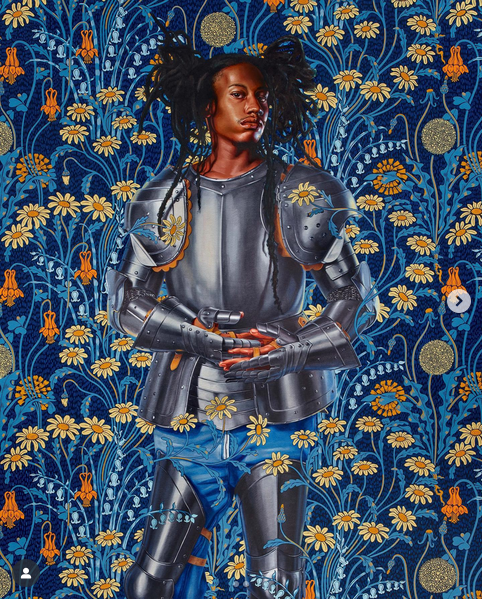
This course explores the literary imagination of medieval England with special attention to the intersection of race, religion, gender, and postcolonialism. We will transform our understanding of the medieval past by foregrounding the following perspectives: 1) the real and rhetorical presence of Black, Indigenous, and people of color in Old and Middle English texts such as Beowulf, the Wonders of the East, and the King of Tars. 2) the critical work of BIPOC scholars, poets, authors, and artists who engage medieval literature, language, and culture in divergent ways. This course is organized by literary genres, which will guide us across different contexts, languages, and histories beginning with Old English prose texts, poetry, and lastly, hagiography. The medieval archive also shapes and is shaped by contemporary medievalisms; our readings will be paired with works such as Patience Agbabi’s 21st-century remix of Chaucer’s Canterbury Tales and Claire Owen’s modern bestiary Seven Gods Seven Demons. Together, we will consider the radical possibilities in reading, thinking, and writing about the European Middle Ages.
Texts:
- Beowulf
- The King of Tars
Selected Readings from:
- The Nowell Codex
- The Canterbury Tales
- Donika Kelly Bestiary: Poems
- Miller Oberman The Unstill Ones
- Patience Agbabi Telling Tales
- bell hooks Black Looks: Race and Representation
- Elizabeth Morrison and Larisa Grollemond. Book of Beasts: The Bestiary in the Medieval World.
- Jonathan Hsy Antiracist Medievalisms From “Yellow Peril” to Black Lives Matter

 thelma trujillo